The 4 C’s of Campaign Communication (and why most churches miss #4)
Church campaigns don’t usually fail because the vision is bad. They fail because the message is fuzzy. People hear fragments—an announcement here, a hallway conversation there—and they never get the full picture.
The result is predictable: leaders feel like they’re “saying it all the time,” while the congregation feels like they’re hearing it for the first time.
The goal of campaign communication isn’t hype. It’s clarity. Clarity is kindness.
The 4 C’s framework
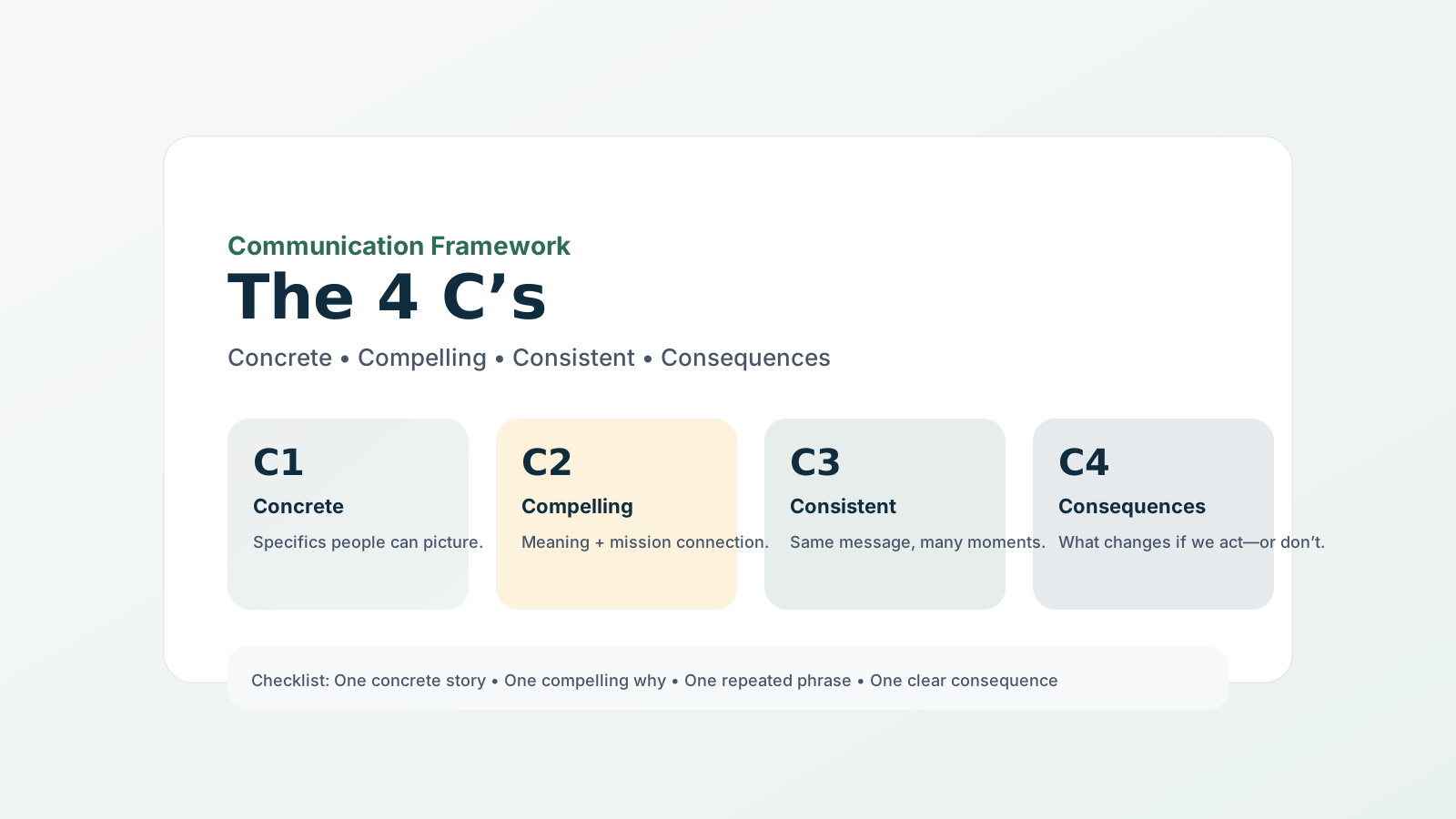
Here’s a simple communication framework you can use for capital campaigns, special offerings, deferred maintenance projects, or any initiative that requires clear participation.
- Concrete — Can people picture it?
- Compelling — Do they understand why it matters?
- Consistent — Are you repeating the same message across time and channels?
- Consequences — Do they know what changes if you act… or if you don’t?
Most churches do the first three (sometimes). The one that gets missed most is #4: Consequences. Leaders worry it will sound like pressure. But consequences aren’t pressure—they’re reality. People can’t make wise decisions without understanding tradeoffs.
C1: Concrete — give people something they can see
Concrete communication answers: What exactly are we doing? Not “improving our facilities.” Not “expanding our ministry.” Those are outcomes. Concrete is paint-by-numbers clarity.
Concrete examples (upgrade these today)
Vague: “We’re making space for the next season.”
Concrete: “We’re converting three classrooms into a secure kids’ wing with check-in and updated restrooms.”
Vague: “We want to serve our city better.”
Concrete: “We’re renovating the fellowship hall to host weekly ESL classes and community dinners.”
Vague: “We need to address deferred maintenance.”
Concrete: “We’re replacing two HVAC units and repairing the roof over the children’s wing to prevent ongoing water damage.”
Concrete communication also includes numbers in a simple way: rough costs, a timeline, and what success looks like. You don’t need every detail on Sunday, but you do need enough detail to feel trustworthy.
C2: Compelling — connect the project to the mission
Compelling communication answers: Why does this matter spiritually and practically? It is not a marketing trick. It’s the pastoral work of connecting resources to purpose.
A helpful scripture for posture is 1 Peter 5:2: “Shepherd the flock of God… not for shameful gain, but eagerly.” Compelling communication should feel like shepherding, not selling.
A simple compelling structure
- Who will it help? (kids, seniors, guests, community partners)
- What barrier will it remove? (safety risk, overcrowding, accessibility)
- What ministry will it enable? (discipleship, hospitality, outreach)
Compelling without exaggeration
Compelling doesn’t mean grandiose. You don’t have to claim that a renovation will “transform the city.” You can say something like:
- “This helps us care for people well.”
- “This removes friction for families.”
- “This lets volunteers serve more sustainably.”
C3: Consistent — say the same thing, many times, many ways
Consistency is where many churches get discouraged. Leaders often overestimate how much people remember. Consistent communication is not annoying repetition; it’s pastoral reinforcement.
Build a “core message” you never change
Create a 1–2 sentence core message and lock it in. Every channel (stage, email, handout, small groups) points back to it.
Core message example
“Over the next 12 months, we’re funding Project Hope to renovate our kids’ spaces and improve accessibility. Our goal is $450,000. We’re inviting participation in ways that fit each household, so that we can serve families and our city well.”
Consistency across channels (a simple cadence)
- Sunday: one short update + one story (60–90 seconds).
- Weekly email: the same core message + one FAQ answer.
- Small groups: one discussion prompt + prayer.
- Lobby/print: one graphic with the core message and next step.
C4: Consequences — what changes if we act (or don’t)?
This is the missing ingredient. Many churches avoid consequences because they fear sounding negative. But consequences aren’t negativity; they’re clarity about tradeoffs.
Two kinds of consequences to name
- Positive consequences: “If we fund this, here’s what we can do.”
- Cost-of-delay consequences: “If we don’t, here’s what continues—or gets worse.”
Examples that don’t sound like threats
- “If we replace the HVAC now, we avoid emergency failures that disrupt ministry and cost more.”
- “If we don’t expand kids’ space, we’ll continue turning families away from volunteers and classrooms.”
- “If we renovate the fellowship hall, we can host community dinners twice a month. If we don’t, we’ll keep limiting outreach to off-site spaces.”
Consequences should be factual, not dramatic. Think “board clarity,” not “fundraising pressure.”
Mini checklist (print this)
- Concrete: Can someone describe the project in one sentence?
- Compelling: Can we name who it helps and why it matters?
- Consistent: Do all channels repeat the same core message?
- Consequences: Have we stated what changes if we act—and the cost of delay?
The pastoral tone that keeps it from feeling “salesy”
Campaign communication is discipleship communication. Your tone should communicate three things simultaneously:
- Gratitude: “We’re thankful for faithful generosity.”
- Clarity: “Here’s the plan and why it matters.”
- Freedom: “We’re inviting participation, not applying pressure.”
“For we aim at what is honorable not only in the Lord’s sight but also in the sight of man.” (2 Corinthians 8:21)
Next Steps (do this in 60 minutes)
- Write your core message (1–2 sentences). Don’t touch it for the rest of the campaign.
- Create one concrete story people can picture (a family, a classroom, a ministry moment).
- List three consequences (2 positive, 1 cost-of-delay) and approve them as leadership.
- Plan a 4-week cadence across Sunday + email + small groups.
- Make the “ask” simple: one link, one QR code, one clear next step.
Want this customized for your church?
Book a free consultation and we’ll build your core message, consequences, and cadence.
Book a Free Consultation