Major Donors: How to Invite Big Gifts Without Pressure or Weirdness
Many pastors and church leaders want to do major-gift conversations well—and they also want to avoid anything that feels like a shakedown. That tension is real.
If you’ve ever thought, “I don’t want to be weird about money,” you’re not alone. The good news is that healthy major-gift invitations don’t require slick scripts or pressure tactics. They require pastoral posture, clear vision, and simple follow-up.
The goal isn’t to “get a big gift.” The goal is to invite someone into aligned generosity—joyfully, freely, and clearly.
First, redefine what a “major donor” conversation is
A major-gift conversation is not a sales pitch. It’s a relationship conversation that explores three things:
- Calling: What does this person care about spiritually and missionally?
- Capacity: What could they do, if they chose to (without assuming)?
- Clarity: What does your church need, and what would a gift accomplish?
When you treat it that way, you remove “weirdness” because you’re not trying to extract something. You’re trying to align vision and stewardship.
The three things that create awkwardness (and the antidote)
1) Anxiety
Leaders often carry hidden anxiety into these conversations: “If they say no, we’re stuck.” People can sense that.
Antidote: do the internal leadership work first. Have a plan that does not depend on one person. Lead gifts accelerate a plan—they don’t create it.
2) Vagueness
Vagueness forces the donor to do all the mental work. “We’re trying to grow” doesn’t help them discern.
Antidote: bring a clear, concrete opportunity with a defined outcome.
3) Unclear follow-up
Most weirdness happens after the meeting: silence, uncertainty, or repeated nudges that feel like pressure.
Antidote: agree on next steps before you end the conversation.
A healthy posture: curiosity, gratitude, and freedom
Your posture sets the tone more than your words. Healthy posture can be summarized like this:
- Curiosity: “Tell me what you’re passionate about right now.”
- Gratitude: “Thank you for how you’ve served and given over the years.”
- Freedom: “We’re inviting you to consider; there’s no pressure.”
A scripture that supports this posture is 2 Corinthians 9:7: giving is purposeful and free, not coerced. Your invitation should make that freedom feel real.
The simple structure: 5 moves for a great major-gift conversation
Move 1: Begin with relationship, not the project
Start with genuine interest. Ask about family, work, and what God has been teaching them. Then ask a generosity question that opens a door:
- “When you think about your giving, what kind of impact do you most hope for?”
- “Are there ministry areas that especially have your heart?”
Move 2: Share the vision in concrete terms
Use one sentence people can repeat. Avoid long backstory. Aim for clarity and steadiness.
One-sentence vision example
“We’re funding a 12-month project to replace critical HVAC and repair the roof so our kids’ spaces are safe, welcoming, and reliable every week.”
Move 3: Offer an invitation (not a pitch)
The most important word in this moment is open. Open creates room for discernment.
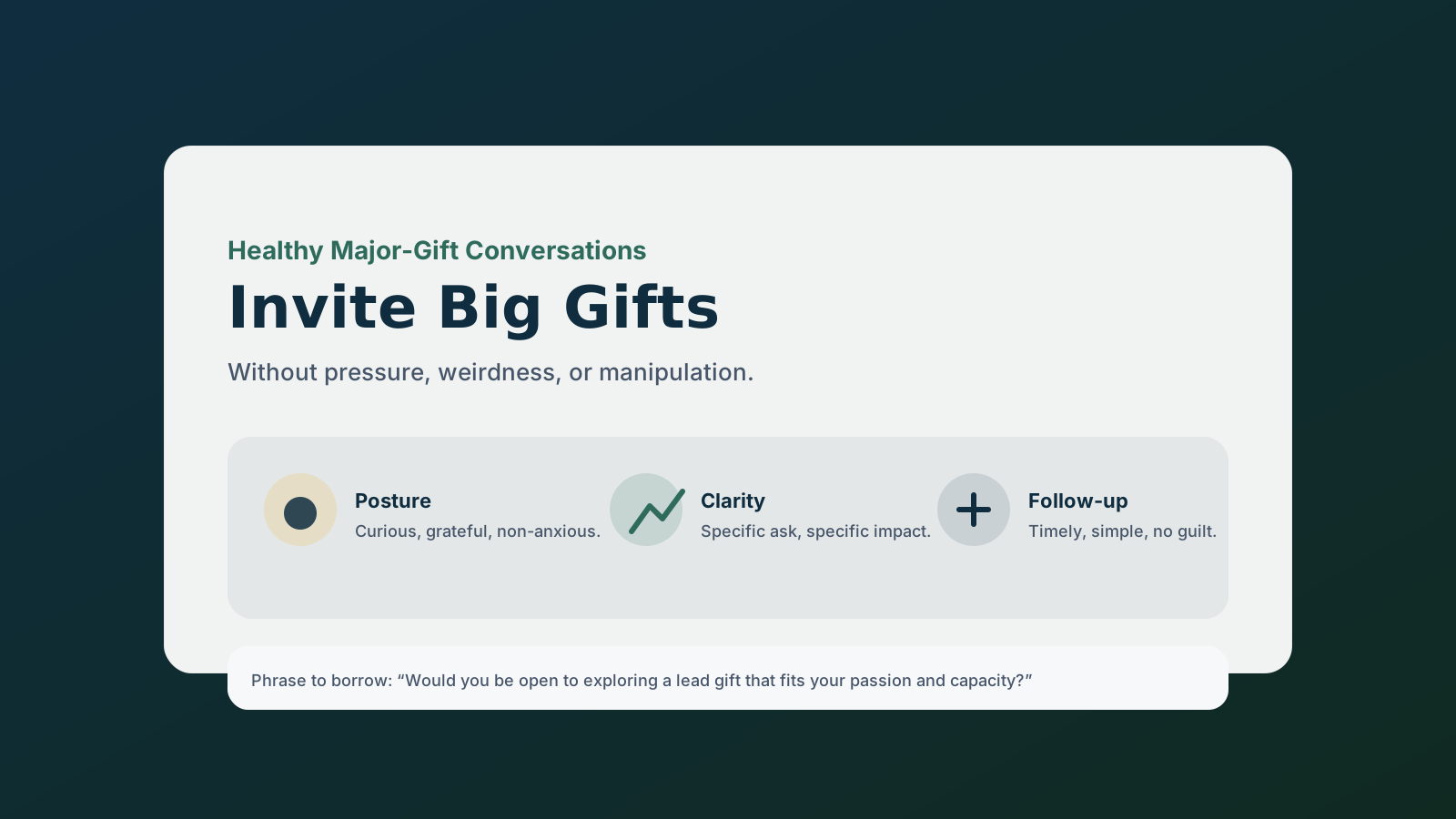
- “Would you be open to exploring a lead gift that fits your passion and capacity?”
- “Would you be open to considering a gift in the range of ___ to help us move forward sooner?”
If you need to state a number, do it plainly and kindly. Don’t inflate. Don’t manipulate. And always connect the number to impact.
Move 4: Let them respond without rescuing the moment
Silence is not your enemy. Give them time. If they hesitate, you don’t have to fill space. Your calm communicates confidence.
- If they say yes: thank them, clarify timing, and confirm next steps.
- If they say no: thank them, keep the relationship warm, and invite prayer.
- If they say maybe: ask what information would help them discern.
Move 5: Close with clear next steps
Weirdness often comes from ambiguity. Before you end:
- Confirm a timeline: “Would it help to reconnect in two weeks?”
- Confirm what you’ll send: a one-page summary, project budget, or story of impact.
- Confirm the posture: “Thank you for considering—no pressure.”
What to say when you’re not sure they have capacity
You don’t need to “qualify” someone like a salesperson. But you can invite them into a category of help without labeling it.
Low-pressure phrasing
- “Some people are considering gifts at different levels. Would it be helpful if I shared the range we’re inviting?”
- “If a lead gift isn’t the right fit, would you still be open to a meaningful gift that feels joyful?”
- “Would you be open to helping us think through who might have a heart for this?”
A simple follow-up plan (so you don’t chase people)
Here’s a follow-up sequence that is respectful and clear:
- Within 24 hours: a short thank-you text/email. (No extra info unless requested.)
- Within 3–5 days: send the one-page summary and budget snapshot.
- At the agreed time: one check-in: “Any questions as you’ve been praying?”
If the person goes quiet, don’t punish them with repeated pings. Assume good intent, keep relationship warmth, and leave the door open.
Next Steps (do this this week)
- Create a one-page opportunity brief: the need, the plan, the number, and the impact.
- Make a list of 10–20 conversations: people with alignment and relationship—not just perceived capacity.
- Schedule “listening meetings” first: start with curiosity, not the ask.
- Decide your invitation language: pick two sentences and use them consistently.
- Agree on follow-up rules: who follows up, when, and how often (keep it simple).
Want help building a major-gift pathway?
Book a free consultation and we’ll map a relational plan that fits your church culture.
Book a Free Consultation