How to Fund Deferred Maintenance Without Killing Momentum
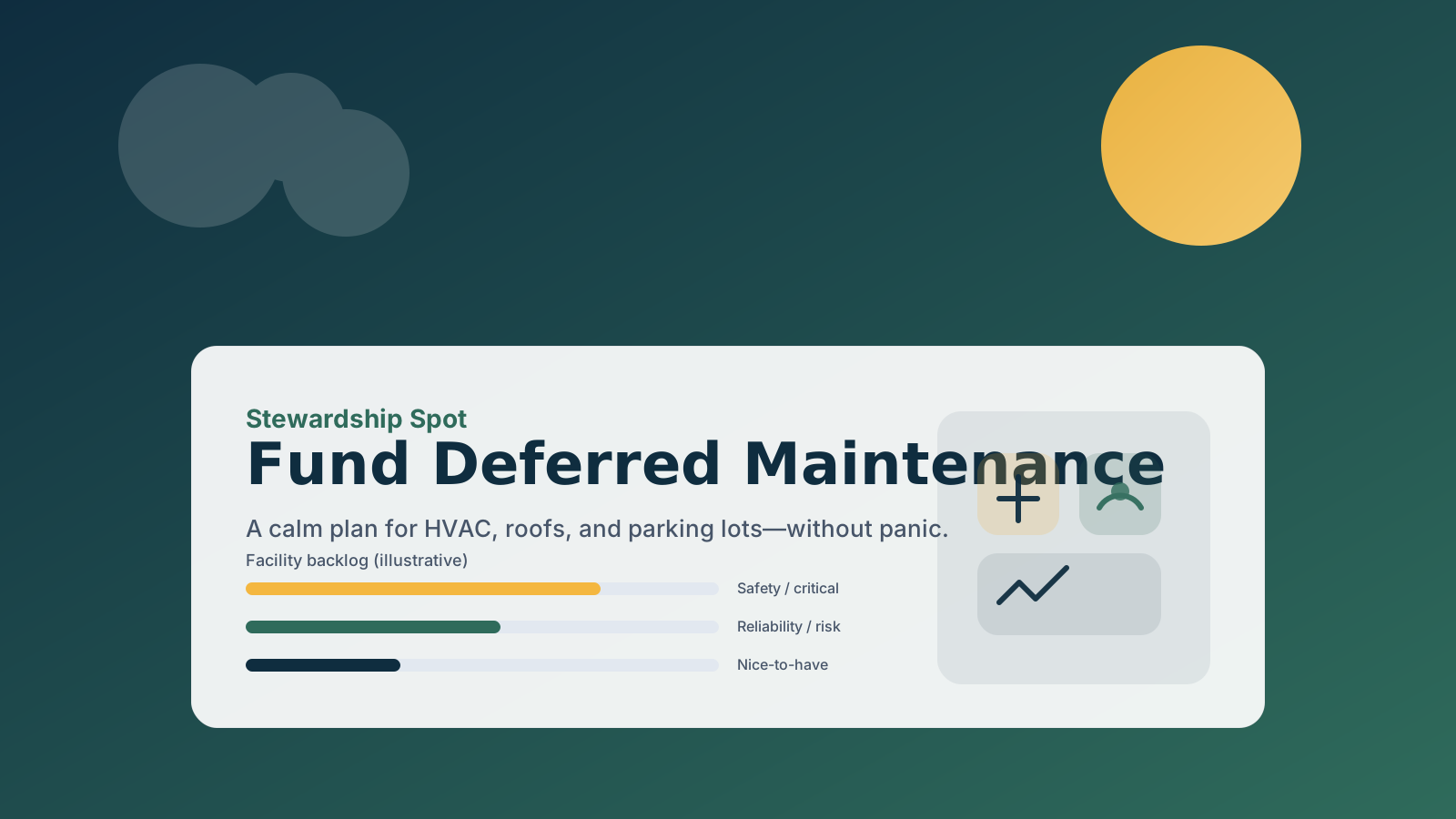
Every church has a facilities story. An HVAC system that limps through another summer. A roof that “probably has a few years left.” A parking lot that keeps collecting potholes like a youth group collects pizza boxes.
The hard part isn’t just the cost. It’s how you talk about it. Many leaders fear that addressing deferred maintenance will drain momentum, make the church sound broke, or turn giving into an endless list of emergencies.
Good news: you can communicate facilities needs with calm confidence. The key is moving from “urgent panic” to “steady stewardship.”
Why deferred maintenance feels so spiritually and emotionally charged
Facility needs sit at an uncomfortable intersection: practical reality, leadership credibility, and congregational trust. If you under-communicate, you surprise people with sudden crises. If you over-communicate, people feel like every Sunday is an invoice.
Scripture gives us a helpful posture here: “Let all things be done decently and in order” (1 Corinthians 14:40). Order isn’t cold. It’s care. When we plan well, we reduce anxiety. And when we reduce anxiety, we create space for joyful generosity.
The “Momentum Killer” mistakes (and how to avoid them)
Here are three patterns that quietly sabotage generosity and unity:
1) Only talking about maintenance when it’s an emergency
- What it sounds like: “We have to replace the boiler in 30 days or…”
- How people receive it: “Why didn’t we plan? Is there more we don’t know?”
Fix: communicate a backlog before it becomes crisis. Use a simple plan and a simple timeline.
2) Over-spiritualizing a facilities ask
- What it sounds like: “If you really care about the mission, you’ll…”
- How people receive it: guilt and resistance—especially from faithful givers.
Fix: keep the tone pastoral, but don’t manipulate. Facilities are a stewardship responsibility, not a test.
3) Giving numbers without meaning (or meaning without numbers)
- Numbers-only: “We need $180,000.” (So what?)
- Meaning-only: “We want excellence.” (At what cost? By when?)
Fix: marry the two: cost, timing, and impact in the same breath.
A calm plan: the 5-step “Steady Stewardship” approach
Think of deferred maintenance like any other leadership challenge: you gather facts, make a plan, align leaders, communicate clearly, and invite participation.
Step 1: Turn the backlog into a simple “risk map”
Most churches have a list. Lists overwhelm people. What you want is a risk map—three categories that make decision-making obvious:
- Safety / critical: issues that could cause damage, safety hazards, or ministry shutdown.
- Reliability / risk: systems likely to fail soon or cost more the longer you wait.
- Nice-to-have: improvements that matter, but are not urgent.
This is a leadership gift to your congregation: it shows you’re not reacting—you’re prioritizing.
Step 2: Name the “why” in ministry language (not facilities jargon)
People don’t give to ductwork. They give to mission. That doesn’t mean you hide the practical need; it means you translate it.
- HVAC: “A safe, welcoming space for kids, seniors, and guests—week after week.”
- Roof: “Protecting the spaces where we worship, counsel, and disciple.”
- Parking lot: “First impressions and safety for families and guests.”
Step 3: Set a reasonable funding target with a clean scope
The goal is not “fix everything forever.” The goal is a clear, achievable scope that reduces risk and builds confidence. If the scope is fuzzy, leaders sound anxious. If leaders sound anxious, people become cautious.
Helpful framing:
- Phase 1 (12–18 months): safety/critical + the most expensive failure risks.
- Phase 2 (next 18–36 months): reliability upgrades and preventative replacements.
- Phase 3 (as able): nice-to-have improvements and beautification.
Step 4: Communicate with confidence: “Here’s the need, here’s the plan”
Your congregation doesn’t need a 40-slide facilities report. They need a steady summary and a few repeatable phrases.
A sample Sunday script (adapt this)
Tone: calm, transparent, non-anxious.
“Church, we want to steward our campus in a way that’s responsible and welcoming. Over time, like any building, we’ve built up a backlog of maintenance—things like HVAC, roof work, and the parking lot. We’ve done the homework, we’ve prioritized what’s critical, and we have a clear plan.
Over the next 12 months we’re addressing the most urgent items first, with a total cost of about $___. We’re inviting participation, not pressure. If you’re able to give above and beyond your regular giving, thank you. If you’re not, thank you for your faithful support. Either way, please pray for unity and wisdom as we steward well.”
Notice what this does: it gives clarity, honors faithful givers, and removes panic from the room.
Step 5: Create two pathways to participate (everyone + lead gifts)
Most churches unintentionally create a single-lane giving road: “everyone give something.” That’s fine—unless the need is large. Then you need two pathways:
- Congregational pathway: a clear goal, timeline, and simple giving instructions.
- Lead-gift pathway: a small set of relational conversations with potential capacity to accelerate the project.
This is not favoritism. It’s wise stewardship. In many churches, a small number of larger gifts can reduce the length of a campaign, which reduces fatigue for everyone.
How to talk about need without sounding desperate
Desperation usually comes from one of two sources: fuzzy plans or fearful leaders. If your plan is clear, your tone can be calm.
Use “non-anxious transparency”
- Say what’s true: costs, timeline, and why it matters.
- Don’t catastrophize: avoid “If we don’t do this, everything falls apart.”
- Do name real consequences: “Waiting increases risk and cost.”
Replace these phrases
Instead of: “We’re in trouble.”
Try: “We have a clear need and a clear plan.”
Instead of: “We just need everyone to step up.”
Try: “We’re inviting participation in ways that fit each household.”
Instead of: “This is urgent!”
Try: “This is timely—waiting increases risk and cost.”
Guardrails that protect momentum
Momentum is spiritual and relational, not just financial. Here are a few guardrails that keep your people encouraged:
- Don’t stack asks: avoid multiple simultaneous initiatives unless you explain how they fit together.
- Celebrate faithfulness: acknowledge consistent givers and volunteers—money isn’t the only metric.
- Report progress simply: monthly or quarterly, with one chart and one story of impact.
- Keep mission visible: remind people why the building serves the people.
“For God is not unjust so as to overlook your work and the love that you have shown for his name…” (Hebrews 6:10)
Next Steps (do this this week)
- Build your risk map: list every facility need under Safety / Reliability / Nice-to-have.
- Pick a Phase 1 scope: 12–18 months, clear costs, clear outcomes.
- Write a one-page summary: “Here’s the need, here’s the plan, here’s how to participate.”
- Align leaders: staff + elders/board agree on scope, tone, and timeline.
- Identify 8–15 relational conversations: potential lead-gift pathway (done respectfully).
Want help shaping your plan?
Book a free consultation and we’ll turn your backlog into a calm, fundable plan with clear language.
Book a Free Consultation